Introduction
Mobile commerce has quietly moved from a convenience to a default. For a growing share of consumers, the smartphone is now the primary device through which they discover, research, and purchase products. What once felt like a secondary channel has become, for many brands, the most important one.

The shift has been driven by a combination of factors: faster devices, better designed apps, and a generation of shoppers who are entirely comfortable making financial decisions on their phones. Retailers that treated mobile as an afterthought are now scrambling to catch up, while those that invested early are reaping the benefits.
This article examines what mobile commerce is, why it has grown so rapidly, and how platforms like Appbrew and Tapcart are helping Shopify merchants build the kind of mobile experiences that actually convert.
Defining Mobile Commerce
Mobile commerce, commonly referred to as m-commerce , encompasses any commercial transaction conducted through a mobile device. That includes buying products through an app, transferring money, booking travel, paying at a physical checkout, or purchasing tickets to an event. If money changes hands on a mobile device, it falls within the scope of m-commerce.
The most widespread forms of mobile commerce today include:
- Shopping through dedicated apps or mobile optimized websites
- Social commerce , purchasing directly through platforms like Instagram, TikTok, or Facebook
- Mobile payments via services like Apple Pay and Google Pay
- In app purchases within games, entertainment, or subscription services
- Mobile banking and peer to peer money transfers
- Digital ticketing for events and transportation
The common thread running through all of these is accessibility. Mobile devices are with people throughout the day, which means brands have more opportunities to connect with customers than ever before , provided the experience is worth engaging with.
The Scale of Mobile Commerce
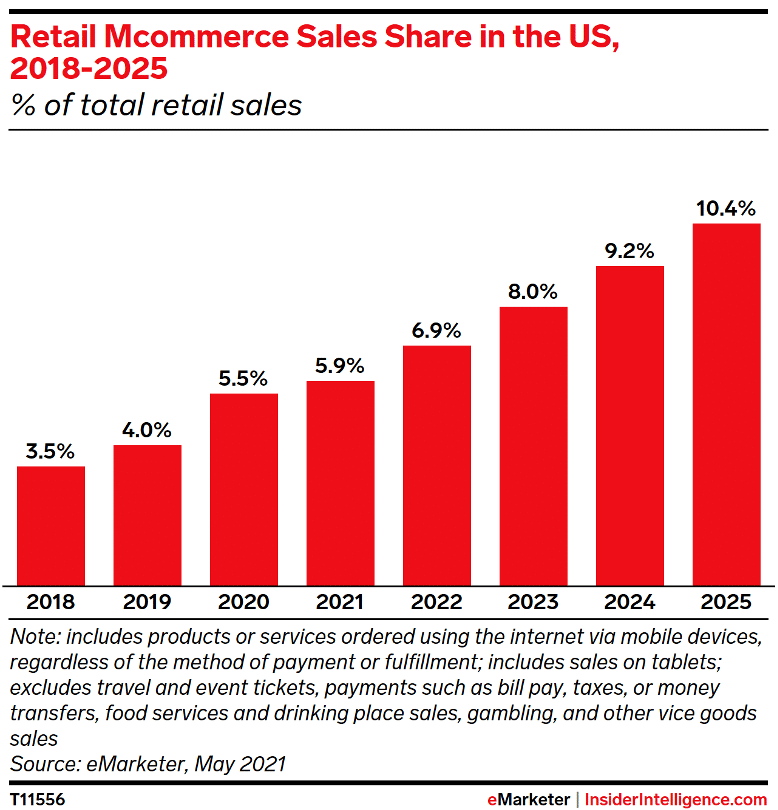
The numbers make a compelling case on their own. Mobile commerce is not a niche behavior , it is mainstream, and it is growing.
- 77% of American adults own a smartphone; 53% own a tablet, representing a vast addressable market for mobile first experiences.
- Nearly one third of U.S. internet users made purchases on their mobile devices on a weekly basis as of 2021.
- Mobile devices accounted for close to 59% of all global web traffic in Q2 2022.
- During the COVID 19 pandemic, 51% of Americans downloaded at least one new shopping app.
- 60% of online shoppers now report preferring apps over mobile websites when shopping.
- 88% of consumers have at least one shopping app installed on their phone.
Insider Intelligence projected that mobile’s share of total U.S. retail sales would nearly double between 2020 and 2025. For most brands, this is not a trend on the horizon , it is already the reality they are operating in.
What Makes Mobile Commerce Effective
Convenience and Accessibility
Mobile commerce removes the friction that has historically stood between a customer and a purchase. There is no need to open a laptop, navigate to a website, and enter payment details from scratch. A product seen in a social feed, a recommendation received from a friend, or a push notification from a favorite brand can all translate into a completed purchase within seconds. For repeat buyers especially, this level of convenience has a significant impact on purchase frequency.
Personalization
Well built mobile apps can deliver a shopping experience tailored to the individual. By drawing on purchase history, browsing behavior, and location data, brands can surface relevant products, offer timely promotions, and communicate in ways that feel considered rather than generic. This kind of personalization is difficult to replicate on a standard website and is one of the main reasons app users tend to spend more and return more often.
Streamlined Payments
Services like Apple Pay and Google Pay have significantly reduced checkout friction on mobile. Customers no longer need to manually enter card details or billing addresses , authentication is handled by face recognition or a fingerprint in a single step. This improvement alone has had a measurable effect on cart abandonment rates, which have historically been higher on mobile than on desktop.
Augmented Reality
Augmented reality has matured from a novelty into a practical shopping tool. In categories like eyewear, skincare, furniture, and apparel, AR features allow customers to visualize products before purchasing, trying on glasses virtually, previewing how a sofa fits in their living room, or seeing how a shade of lipstick looks on their skin tone. These experiences reduce the uncertainty that leads to abandoned carts and post purchase returns.
Native Apps vs. Mobile Websites
One of the most consequential decisions a brand can make in mobile commerce is whether to invest in a native app or rely on a mobile optimized website. The gap between the two is larger than many brands expect.
A mobile website is, in most cases, a responsive version of a desktop site. It works, but it was not designed with mobile first behavior in mind. The average mobile website takes over 15 seconds to fully load , long enough for most users to abandon it. Navigation that works well with a mouse can feel cumbersome with a thumb. And the checkout experience, without saved payment methods and streamlined flows, introduces friction at the most critical moment.
A native app, by contrast, is built specifically for mobile. It loads in a fraction of the time, uses device capabilities like biometric authentication and push notifications, and can be designed around the gestures and interaction patterns that mobile users expect. The difference shows up in the data: app users typically convert at rates two to three times higher than mobile web visitors, and they tend to place larger orders and return more frequently.
Appbrew: Mobile Apps for Shopify Brands
Building a native app has historically required significant investment , both in development resources and ongoing maintenance. Platforms like Appbrew have changed that equation for Shopify merchants by making it possible to launch a fully functional iOS and Android app without any custom development work.
The results reported by brands on the platform are meaningful. Across more than 150 Shopify brands, Appbrew’s data shows 3x higher conversion rates, 1.2x higher average order values, and up to a 5x improvement in customer lifetime value compared to the mobile web experience.
A significant part of what drives those outcomes is the personalization layer built into the platform. Appbrew apps can serve each shopper a home screen tailored to their preferences and purchase history, deliver targeted push notifications based on behavior, and run app exclusive promotions that give customers a tangible reason to download and return to the app. The platform integrates with more than 100 tools that Shopify merchants already use , including loyalty programs, email marketing platforms, subscription management tools, and review apps , so it works alongside an existing tech stack rather than replacing it.
Appbrew has also introduced Milo, an AI agent embedded in the platform that helps brands automate campaigns and personalize the shopping experience at scale. It is designed to reduce the operational burden of running a mobile app, making it manageable for lean teams.
Brands Using Appbrew
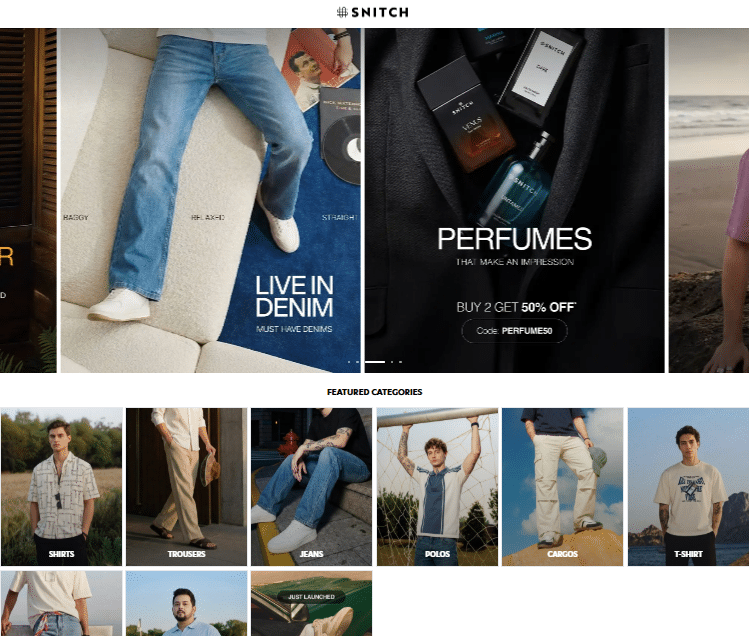
Snitch, a fashion brand, saw 60% mobile revenue growth and conversion rates 2.5 times higher than their website after launching their app on Appbrew. The app has since become one of their primary sales channels.
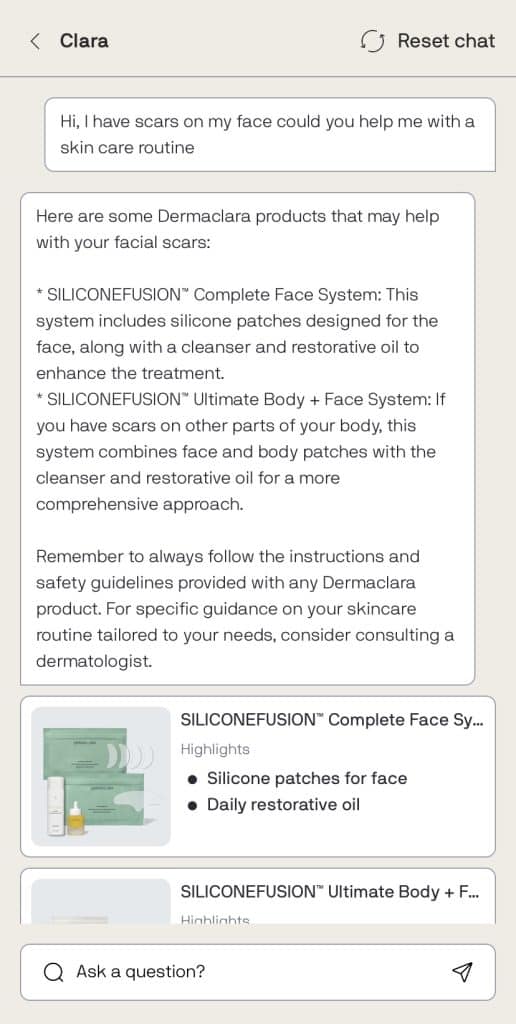
Dermaclara built a skincare concierge called Clara directly into their app. Clara guides shoppers through their skincare concerns, recommends suitable products, and surfaces exclusive offers , replicating the kind of personalized advice typically only available from an in store specialist.
Karma and Luck used Appbrew to run targeted promotions through the app and saw a 50% increase in conversion rate, demonstrating that even relatively focused use cases can produce significant returns when executed on the right channel.

Push Notifications
One of the most valuable capabilities that comes with a mobile app is the ability to send push notifications , direct messages that appear on a customer’s lock screen in real time. When used well, push notifications are among the most effective retention tools available to a brand. A timely message about a restocked item, an abandoned cart, or a time limited offer can recover a sale that would otherwise have been lost.
What makes push notifications particularly attractive from a cost perspective is that, once a customer has installed the app, they are free to send. This stands in contrast to email, SMS, and paid advertising, all of which carry a per message or per impression cost. The caveat is that this channel requires discipline. Brands that over communicate, or that send notifications irrelevant to the recipient, risk losing them entirely. The brands that use push notifications effectively treat each message as an opportunity to add value, not just to drive a transaction.
Chatbots and Conversational Commerce
Chatbots have become a meaningful part of the mobile shopping experience , not as a replacement for human service, but as a way to help customers navigate toward the right product more efficiently. A well designed chatbot can ask a few qualifying questions, narrow down the options, and guide a purchase in a fraction of the time it would take a customer to browse independently.
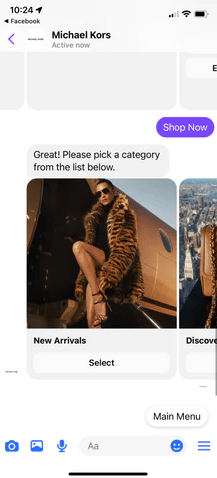
Michael Kors, for example, operates a chatbot through Facebook Messenger that opens by asking users about their style preferences and location, then presents curated product options that can be purchased directly within the conversation. The experience works because it reduces decision fatigue and meets customers on a platform they are already using.
Brands with their own apps can take this further. Dermaclara’s Clara concierge runs natively inside the brand’s app, giving them full ownership of the experience and the customer data it generates , a meaningful advantage over third party chat integrations.
Mobile Commerce Across Industries
Mobile commerce is no longer confined to retail. It is reshaping how people interact with businesses across a wide range of sectors.
Fashion and Apparel
Fashion was among the earliest industries to see significant mobile adoption, and the category continues to push the boundaries of what the mobile experience can offer. According to Adobe Analytics, mobile accounted for 67% of digital visits to fashion e-commerce sites in 2020. Virtual try ons, AI driven style recommendations, and visual search tools have made mobile the preferred channel for fashion discovery and purchase alike.
Food and Beverage
Food delivery has become one of the most mature segments of mobile commerce. The convenience of ordering food through an app has become so embedded in daily behavior that brands in this category now compete heavily on app experience , on speed, ease of reordering, and the quality of personalization, as much as they compete on the product itself. The mobile food delivery market was projected to generate $151 billion in revenue in 2021.
Healthcare
The healthcare sector has seen steady growth in mobile adoption, driven by the expansion of telehealth services and patient facing apps that handle appointment booking, prescription management, and remote consultations. The global mobile health market is expected to reach $236 billion by 2026, reflecting how deeply mobile has embedded itself in how people manage their health.
Travel and Hospitality
A growing proportion of travel bookings, flights, hotels, rental cars are now completed on mobile devices. According to eMarketer, mobile was on course to account for 40% of all digital travel sales by 2023. The complexity of travel checkout flows has historically made mobile conversion challenging, and the brands that have invested in simplifying that process have seen meaningful gains.
Automotive
The automotive industry has been slower to embrace mobile commerce, but the direction of travel is clear. Cox Automotive found that 54% of car shoppers use a mobile device during their research process, and a growing number of dealerships and manufacturers are experimenting with fully digital purchase journeys. The category is still evolving, but mobile is already central to how customers approach car buying.
The Business Case for Mobile Commerce
A Direct Customer Relationship
A mobile app gives brands a communication channel they own outright. Unlike social media, where reach is subject to algorithmic changes and paid amplification, or email, which competes in an increasingly crowded inbox, push notifications arrive directly on the lock screen. Brands that build a strong app user base are less dependent on third party platforms to reach their customers, which has significant long term value.
First Party Data
Every interaction within a mobile app – products browsed, purchases made, notifications opened, time spent on specific pages , generates first party data that brands can use to improve their products, marketing, and customer experience. As third party tracking becomes more restricted and consumer privacy expectations rise, this owned data becomes an increasingly important competitive asset.
Revenue and Cost Efficiency
The financial case for mobile apps is straightforward: app users convert at higher rates, spend more per transaction, and return more frequently than mobile web visitors. At the same time, push notifications offer a low cost channel for re engagement. The upfront investment in building and maintaining an app is real, but for most brands with a meaningful customer base, the economics are favorable over time.
Case Study: elo
Industry: Apparel & Lifestyle | Platform: Shopify Plus
elo was receiving healthy traffic to their website but struggling to convert that traffic into sales. Visitors were browsing but not buying, and the brand needed a more effective way to engage customers and bring them back. Their solution was to build a dedicated mobile app.
The impact was substantial. Today, 35% of elo’s total revenue is generated through the mobile app. Customers who shop through the app convert at four times the rate of website visitors, and the average app order value is approximately 40% higher. The brand drove app installations through two primary channels: Instalify, a web to app conversion tool that accounted for up to 30% of installs by converting existing website visitors, and paid advertising on Facebook targeting high intent users.
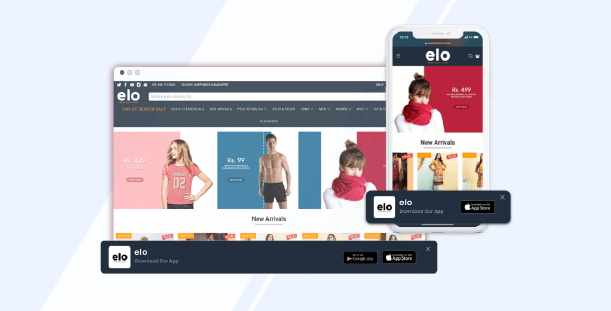
Retention was maintained through a consistent push notification strategy , daily messages about new arrivals, deals, and collections, alongside trigger based notifications for abandoned carts and wishlist activity.
“With nearly 35% of our annual sales coming from the app, I can’t be happier.” , Umar Farooq, Founder, elo
Future Trends in Mobile Commerce
AI Driven Personalization
Artificial intelligence is rapidly becoming embedded in the mobile shopping experience. Size recommendations calibrated to reduce returns, skin analysis tools that guide product selection, and home screens curated around individual preferences are already live on platforms like Appbrew. As these capabilities advance, the personalization gap between a high performing app and a generic mobile website will continue to widen.
Voice Commerce
Voice activated shopping is still in relatively early stages, but the trajectory is upward. Juniper Research projected that voice commerce could reach $80 billion in annual transactions. The use case is strongest for repeat purchases, reordering products a customer buys regularly and is likely to expand as voice assistants become more capable of handling nuanced product discovery.
Augmented Reality
AR shopping features are moving from differentiator to baseline expectation in categories where visualization matters. Virtual try ons for eyewear, skincare, and apparel are already widely available, and the technology is expanding into furniture, home goods, and automotive. As consumer familiarity increases, brands without AR capabilities will find themselves at a disadvantage in high consideration purchase categories.
Owned Channels as Strategic Priority
Perhaps the most significant structural shift underway in mobile commerce is the move toward owned customer relationships. Many brands have grown heavily dependent on paid social and search advertising to drive traffic , a model that is both expensive and increasingly fragile as platform policies and algorithms evolve. Mobile apps represent one of the few channels where a brand owns the relationship entirely. The customer data lives with the brand, communication happens on the brand’s terms, and the experience is shaped by the brand rather than a third party platform. For many Shopify merchants, investing in a mobile app is no longer just a growth tactic , it is a way of securing the long term stability of their customer base.
Conclusion
Mobile commerce has matured into a central pillar of how brands and consumers interact. What began as a supplementary channel has become, for a growing number of businesses, the primary one , and the gap between brands that have invested in mobile and those that have not is widening.
The brands performing well in this space share a few common traits: they have built mobile experiences that are genuinely good to use, they engage customers through push notifications without overextending, and they treat their app as a strategic asset rather than a project deliverable. Platforms like Appbrew and Tapcart have lowered the barrier to doing this well, making it possible for Shopify brands at various stages of growth to compete on the quality of their mobile experience. The opportunity is there, the question is how quickly brands are willing to take it seriously.